2020 AGP Field Season Underway – Day 1

Findelen Basecamp, 0730hrs
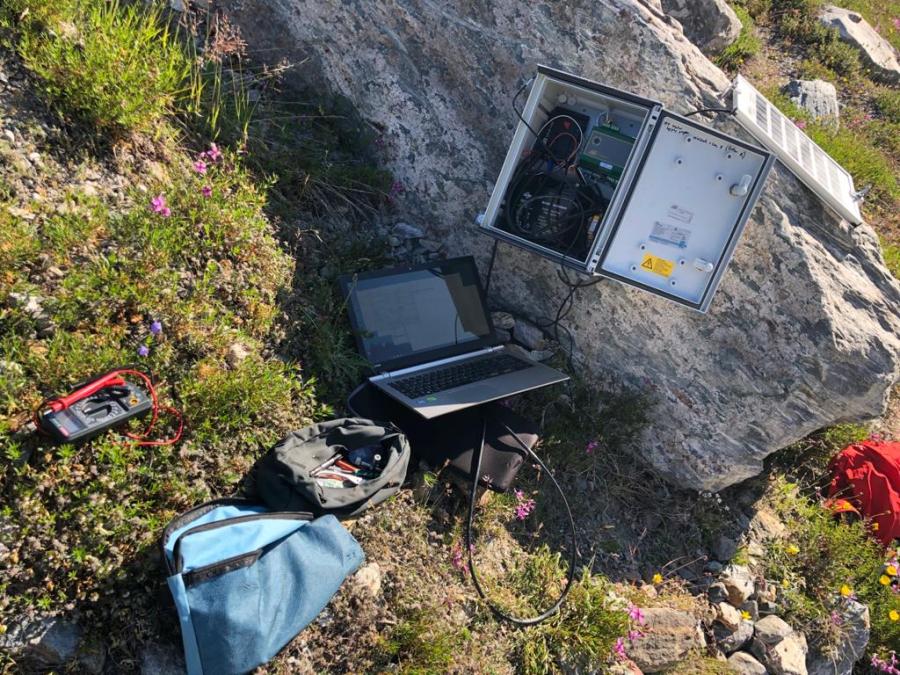
Logging station at Findelen
Data being downloaded
Significant glacier retreat since 2019, and evidence of a substantial flood event

The 2020 Alpine Glacier Project field season in Zermatt is officially underway. We’ve been significantly delayed by travel restrictions related to the COVID-19 pandemic, but Neil and George reached Zermatt last night for a week of data downloading and site maintenance.

So far, data have been downloaded and loggers set up for the 2020 ablation season. We’ve managed to set up more loggers to investigate the impact of braided section on glacial water temperature. Tomorrow, and this is exciting, we’re planning a drone survey of the Findelen outwash plain.

Initial indications are of a significant recent flood event at Findelen which has moved substantial amounts of debris and sediment downstream. Unfortunately, some upstream equipment appears to be lost, but logging stations further downstream by the gauging station are intact and data are available.

Although the weather from this morning’s pictures looks glorious (a “0/8” for AGP alumni), this afternoon has seen heavy thunderstorms and rain.

Nature: Glacier mass loss driven by climatic change will affect Chamonix’s hydrology

A recent paper published by Laurent et al. in Nature illustrates the likely impact of climatic change on the hydrology of the Mont Blanc Massif region.

The authors argue that by 2100, the impact of climate change on the cryosphere and hydrosphere in the Alps is expected to lead to a decrease in annual river discharge, but with seasonal change – namely increases in winter discharge of up to 80% and summer decreases of 40%.

Such shifts in discharge patterns will have significant downstream impacts on water quantity and quality, affecting hydroelectric generation, agriculture, forestry, tourism and aquatic ecosystems.

The paper can be accessed here.

155th Anniversary of the Ascent of the Matterhorn

Today, July 14th, marks the 155th anniversary of the ascent of the Matterhorn by Edward Whymper, Lord Francis Douglas, Charles Hudson, Douglas Hadow, Michel Croz, Peter Taugwalder and son. An extraordinary achievement of skill and endurance, it was the last of the great Alpine peaks to be conquered.

Whymper’s successful attempt, his eighth, was to end in tragedy however. Alpine Glacier Project participants will be familiar with the debate around what happened during the descent, and can examine the evidence first hand in Zermatt’s Matterhorn Museum.

entwistle-2012-september-zermatt-p1010337

Letting rivers run wild could reduce UK flooding

A new article published by the Alpine Glacier Project’s Dr Neil Entwistle in TheConversation.com states that doing nothing is often a better course of action for reducing flooding than heavy handed attempts to mechanically alter rivers.

The study showed that rivers which are allowed to behave more naturally are better at locking up sediment upstream, rather than letting it accumulate in unnaturally high quantities in flood-prone towns and cities.


Glaciation in New Zealand – evidence of retreat in the last decade

The Alpine Glacier Project’s Antony Lockley reports from Fox Glacier on New Zealand’s South Island. Whilst the glacier advanced between 1985 and 2009, it has subsequently been in retreat.


Fox Glacier continues to be active, with ice movement between 1 to 5 metres per day dependent on elevation. Anthony’s video and photographic coverage clearly shows the extent of retreat over the last 10 years.


The ice surface, whilst accessible, is spectacular.